Elder Scrolls Online: You Belong Here
for
Elder Scrolls Online

With
Other Things






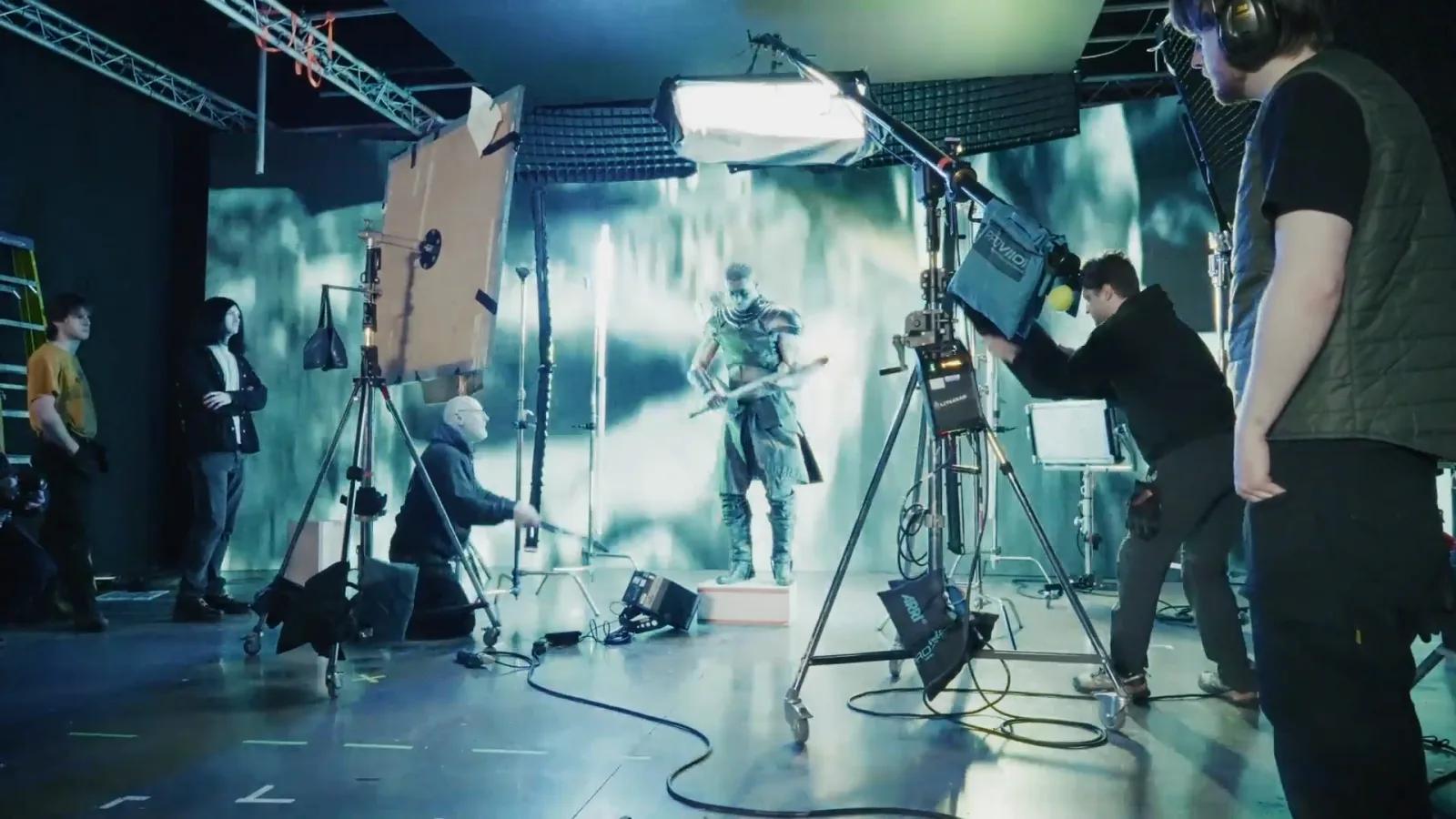
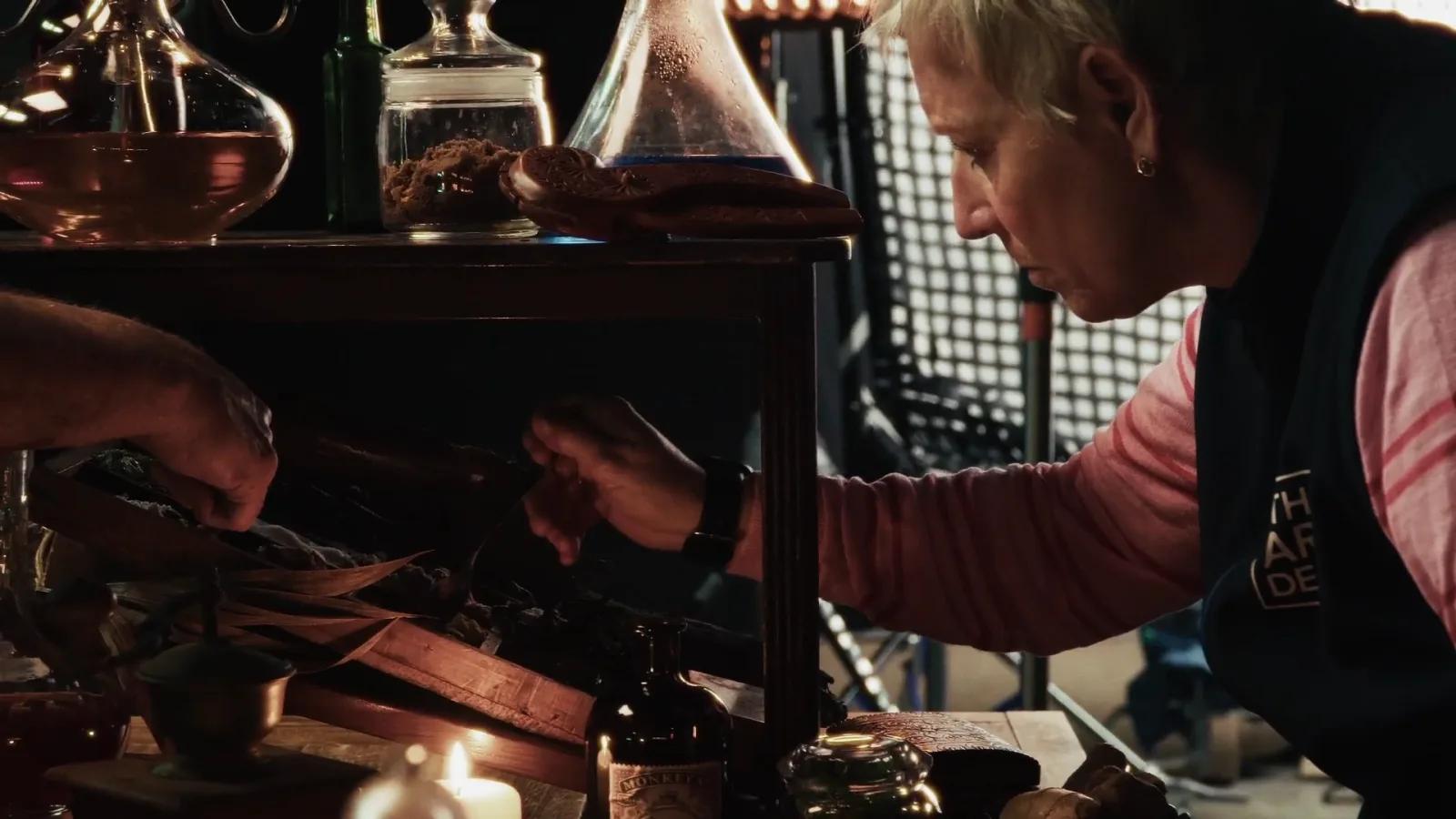
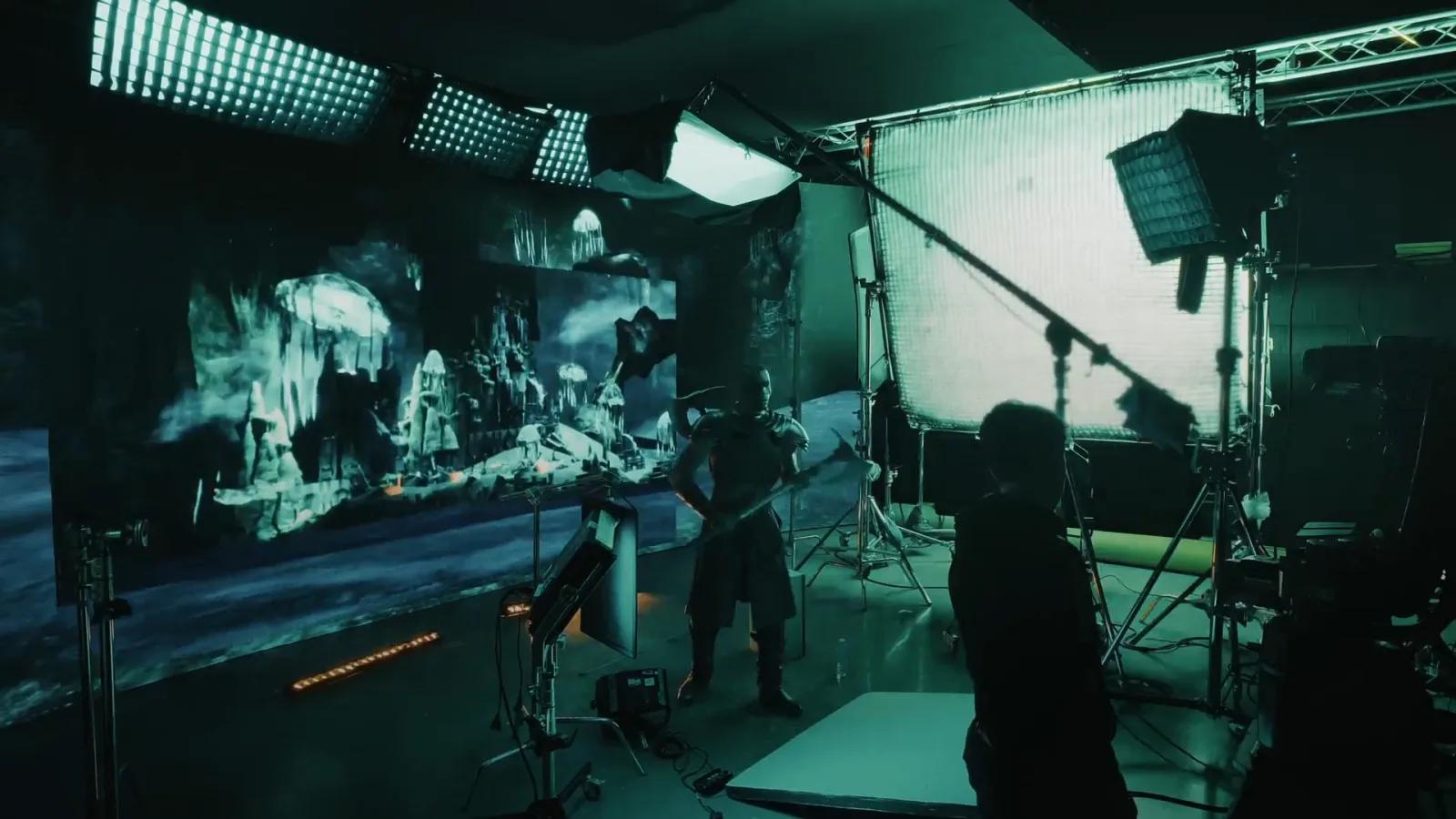
To say that we were excited when Other Things came to us for the production of ZeniMax and Bethesda’s first ever live action Elder Scrolls Online trailer would be a monumental understatement. As long-time fans of this blockbuster video game franchise ourselves, the opportunity to work in this sprawling fantasy universe was an absolute privilege - and we still get the chills when that iconic theme music kicks in! The objective was to bring four distinct environments from the game into the real world, keeping every minute detail as faithful to the source material as possible. With access to the original 3D assets ripped straight from the game engine, we built a hybrid workflow that combined real-time CG environments on our LED virtual production stage with practical sets, 3D printed props and hand-finished wardrobe - all guided by three decades of Elder Scrolls artwork.


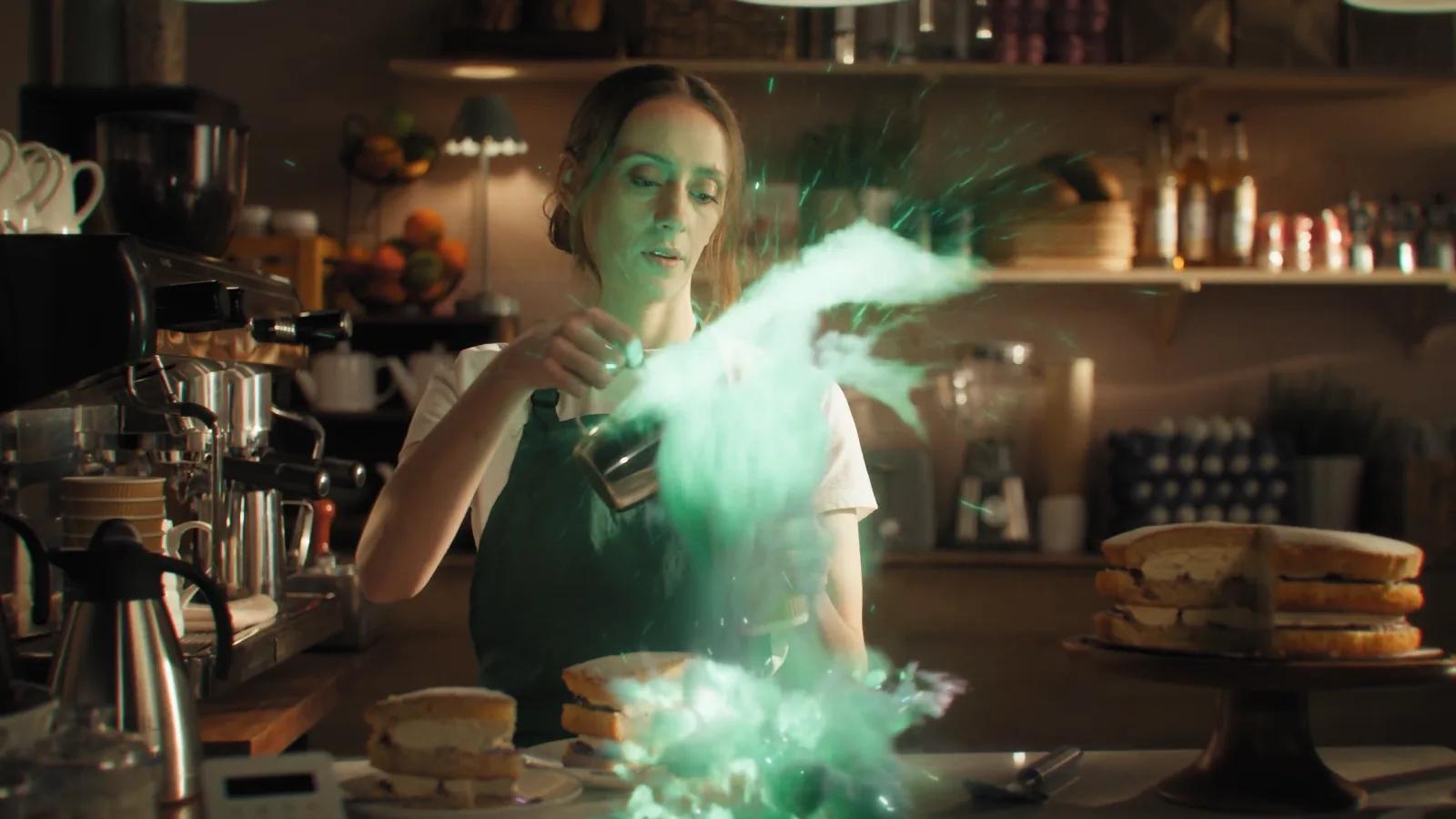
The concept for the trailer was to take real-world characters going about their everyday lives and thrust them into the epic world of Elder Scrolls Online: from the morning commute to snowy Western Skyrim, a five-a-side match to the caves of Blackreach, a high-rise office to the mountains of Elsweyr, and a coffee shop counter to a Dark Elf potion lab. Each transformation was designed to be a continuous shot, like the barista’s latte steam twisting into magical vapour as the set morphed into the Dark Elf apothecary, or the office collapsing away to reveal a sweeping mountaintop vista.
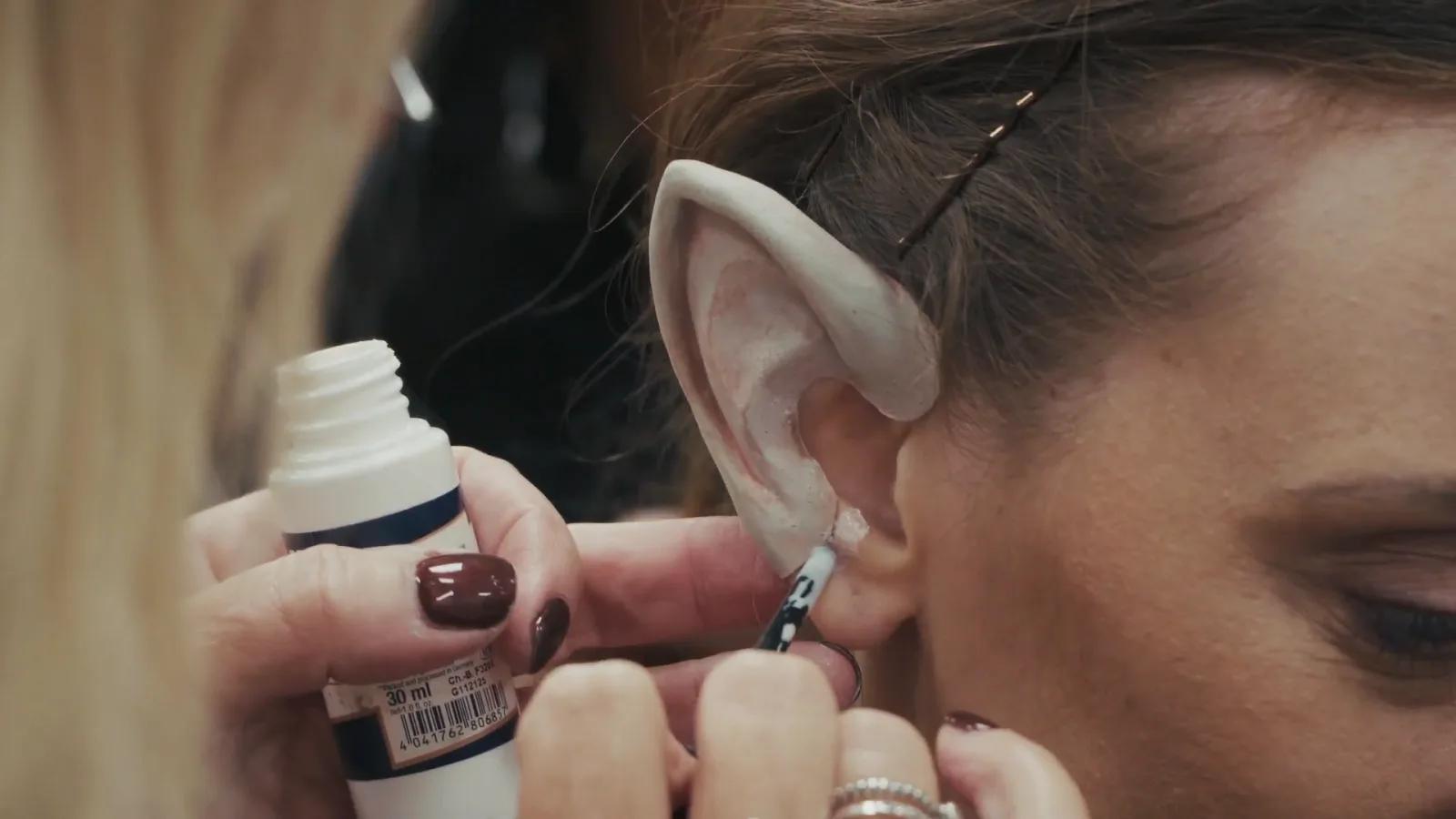
We began our hybrid production pipeline by adapting hundreds of approved game assets for real-time playback in Unreal Engine. Landscapes, buildings, props and characters were optimised to work on our LED wall so that they would blend seamlessly with physical sets, lighting rigs and motion control camera in the virtual production studio stage. Weapon props like the iconic “Blade of Woe” along with costume and armour details were 3D-printed from the original high-resolution CG sculpts, then hand-finished to look like steel, leather and bone.
Scene changeovers measured in minutes, not hours, thanks to careful pre-vis and a single integrated preview loop on set. Throughout, we kept story and art direction at the forefront of the project; virtual production was simply the only way to bring real people, armour and props into the game world faithfully. We led the hybrid setup from pre-viz to post - removing the complexity, and making it simple to focus on the narrative.
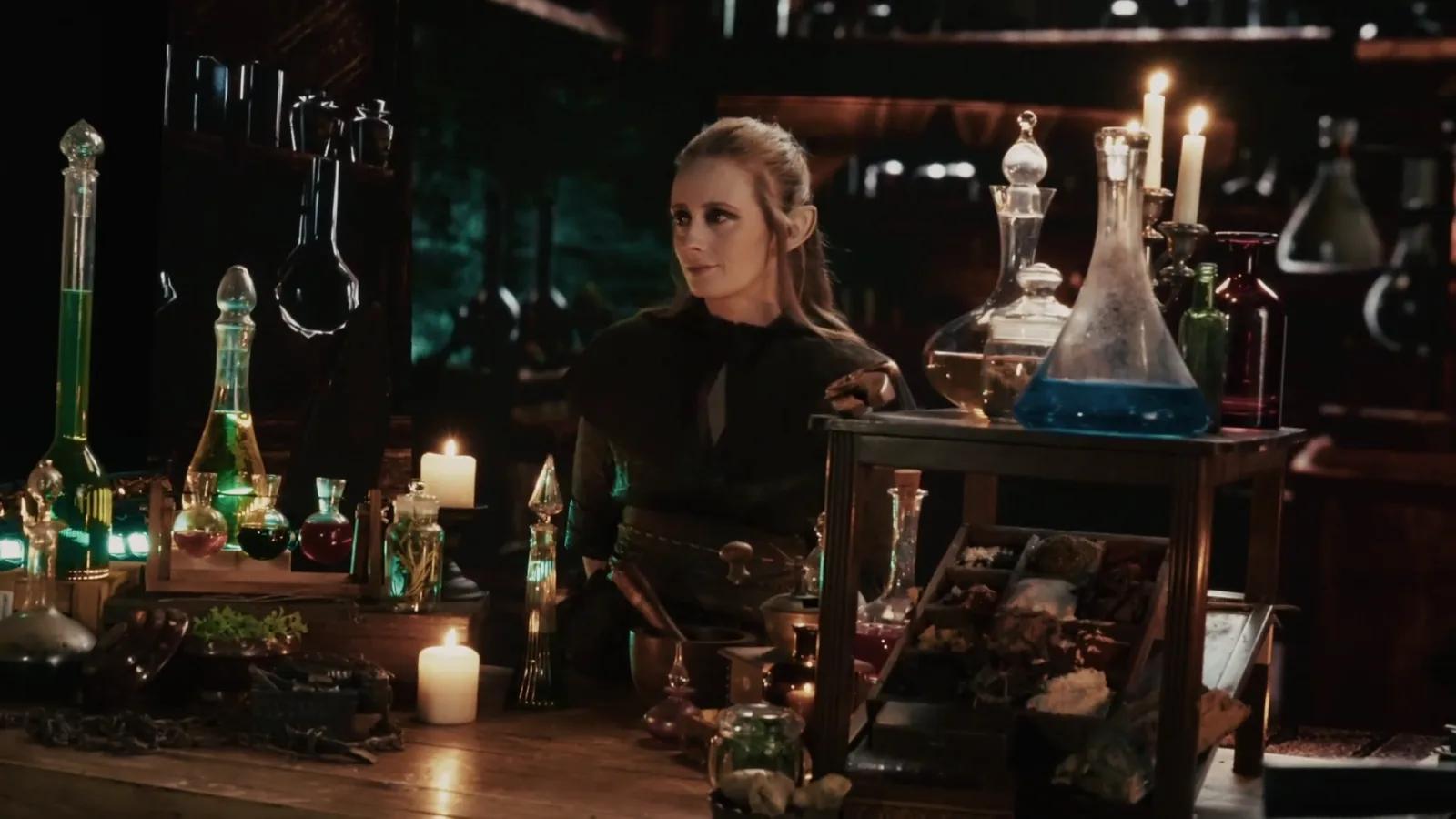
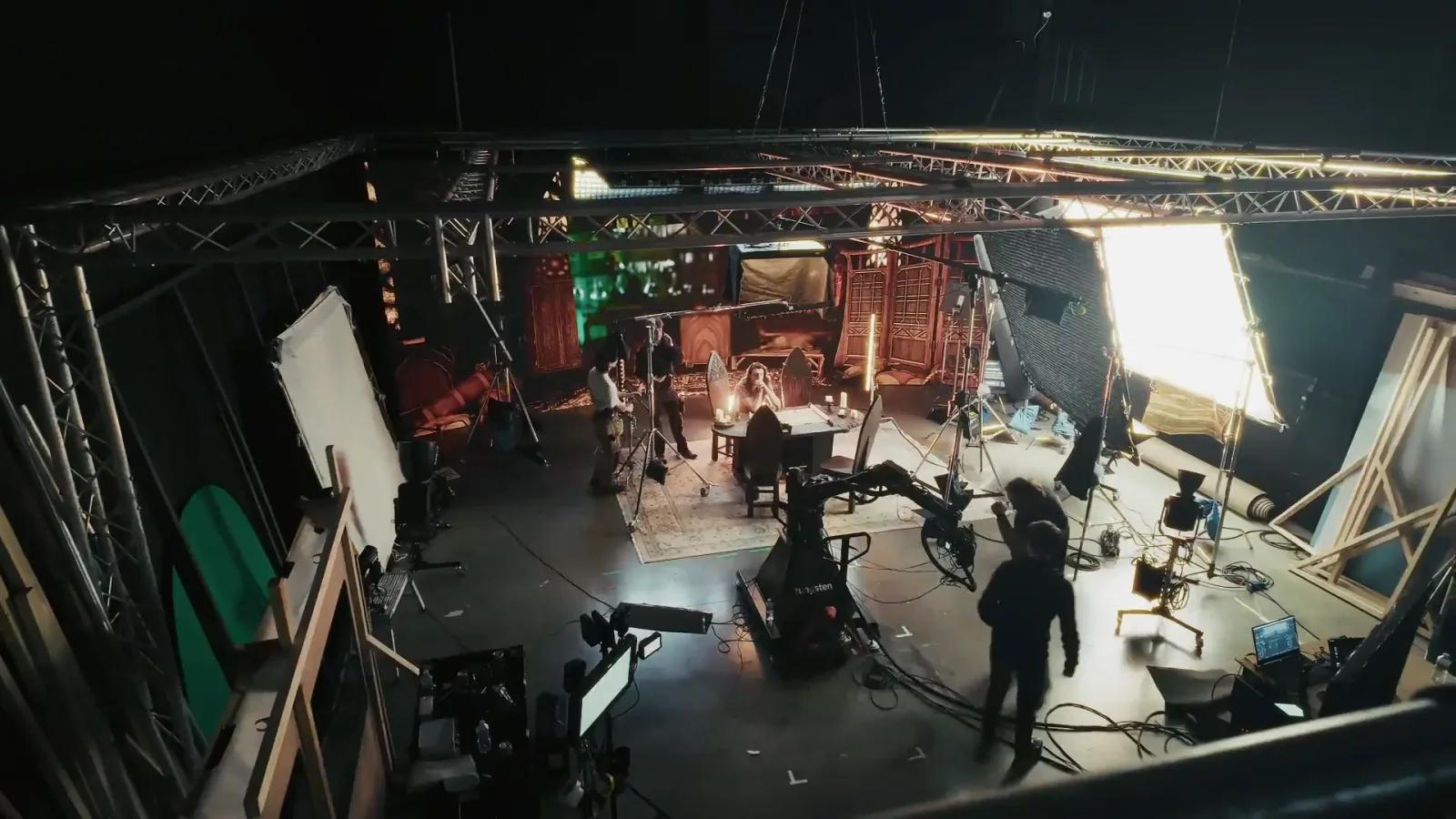
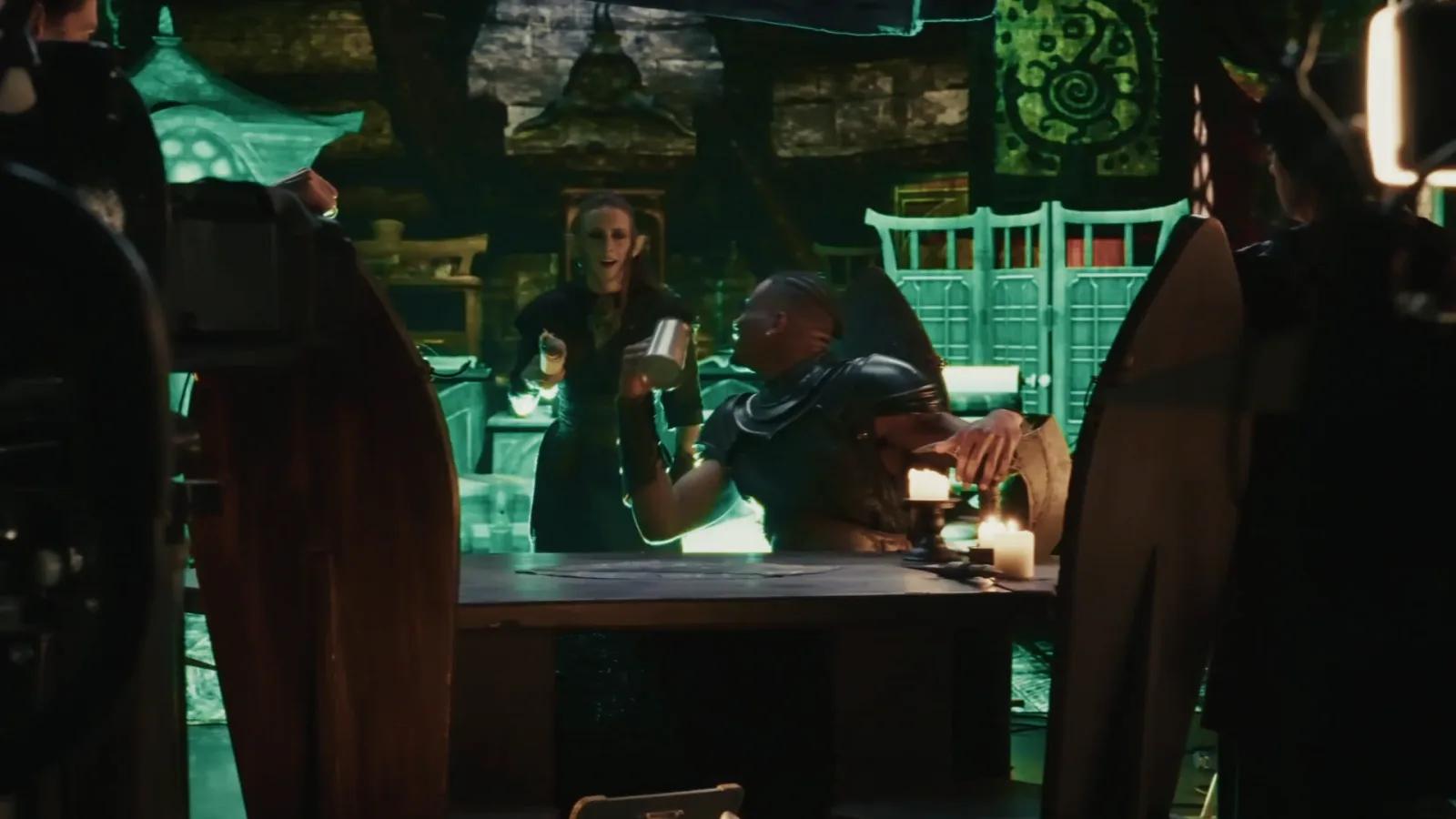
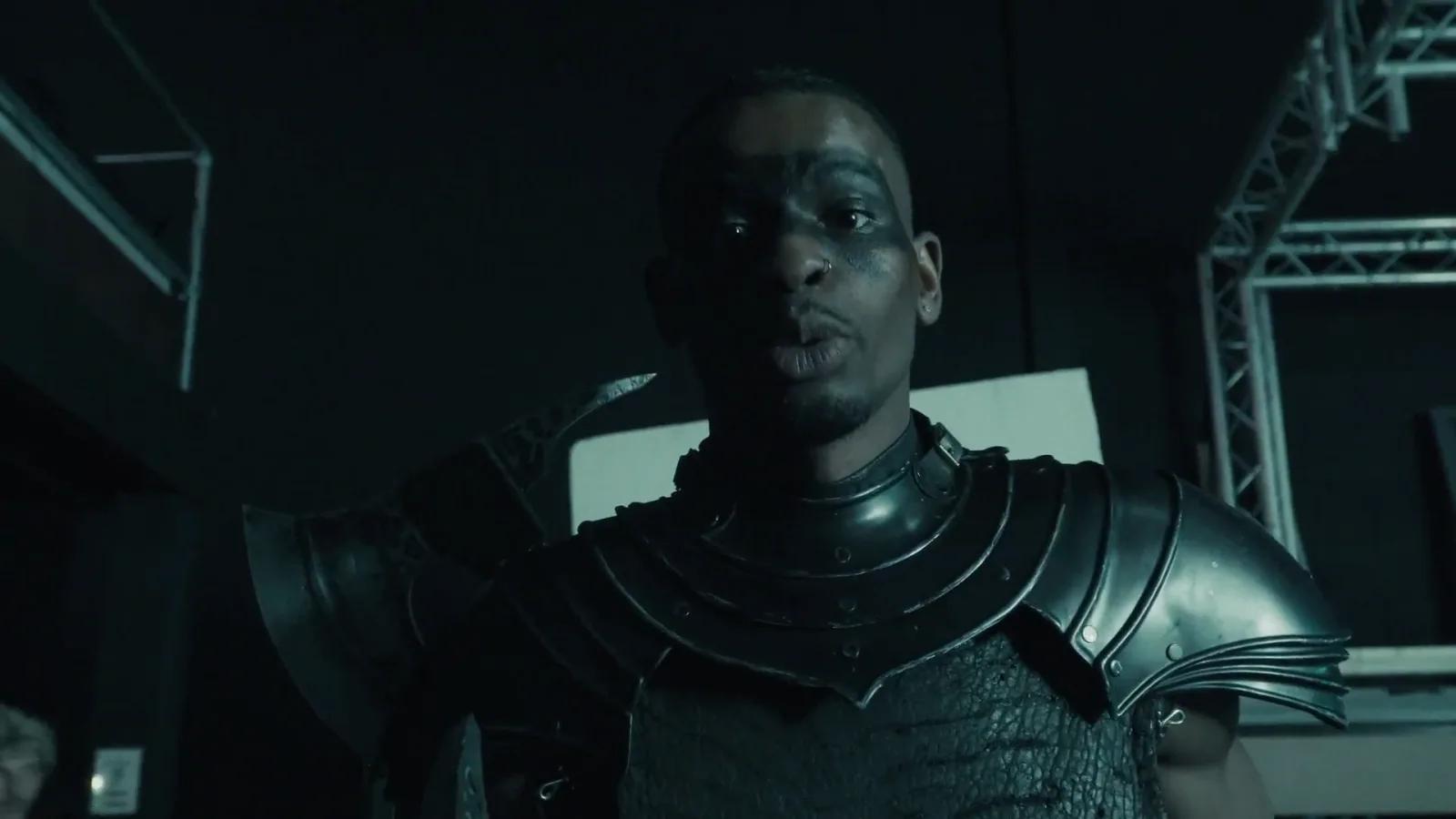
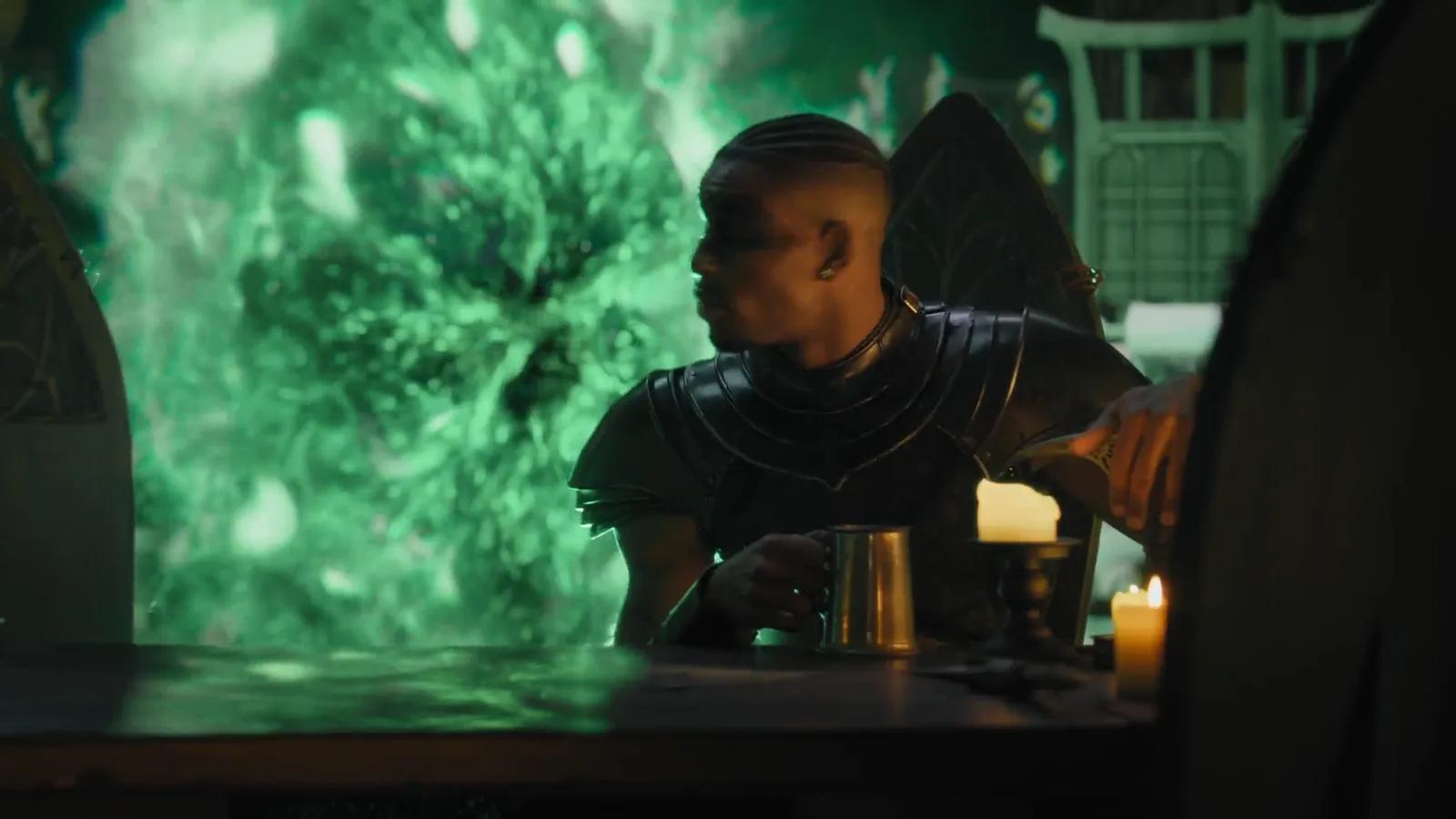
Using Virtual production meant the environments were live on set, so the post process focused on refinement and enhancement. Clean plates and motion control metadata allowed the edit team to easily integrate compositing and VFX elements, which included fantastical moments like an arrow smashing through a commuter train window in super slow-motion, a dragon swooping over the camera, and the writhing green glow of an arcanist’s portal.
Everything was then pulled together by a colour grade that preserved the colour logic agreed on the day, so transitions from real world to magical realms felt intentional and smooth - all enhanced by a finely tuned sound mix, textured with sound effects pulled directly from the original game files alongside the soaring Elder Scrolls Online theme music.
All that was left to do was final delivery, with a hero 60-second edit accompanied by 30-second and 15-second cutdowns all supplied in 16x9, 9x16 and 1x1 aspect ratios for use across web and social platforms.