
Get your hands
on the manual.
Hybrid production in sixty-two pages.
We've been making this work for years before the industry had a name for it. So we wrote it down. Why the old model breaks, how the new one works, three campaigns where we made it stick, and the tools we built along the way.
I want it →What's inside
Five chapters.
The full working method.
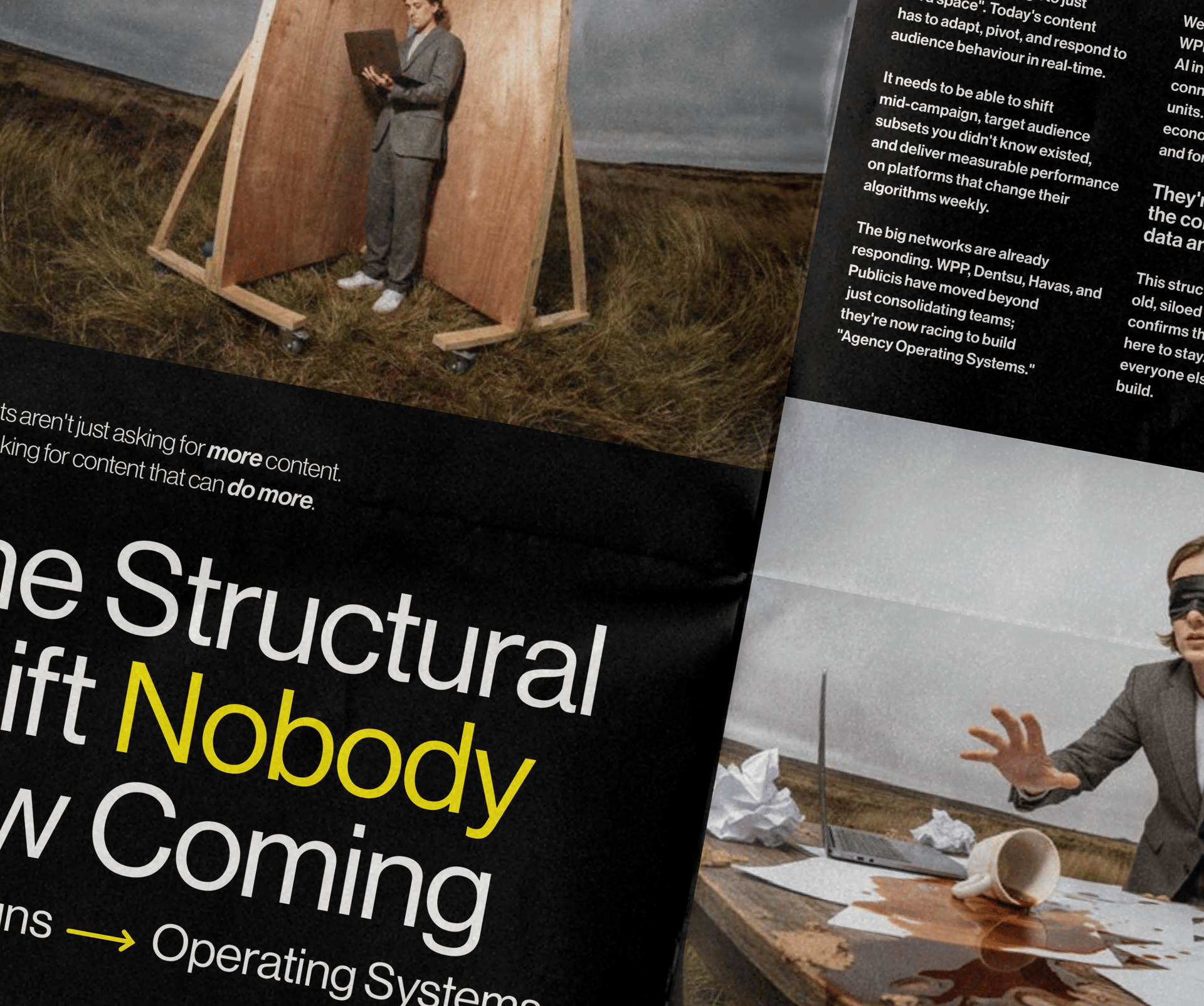
01
Expectations Evolution
Voices from across the industry on what the squeeze actually feels like. Demand has quadrupled. Budgets have flatlined. The linear production model is breaking under the weight.
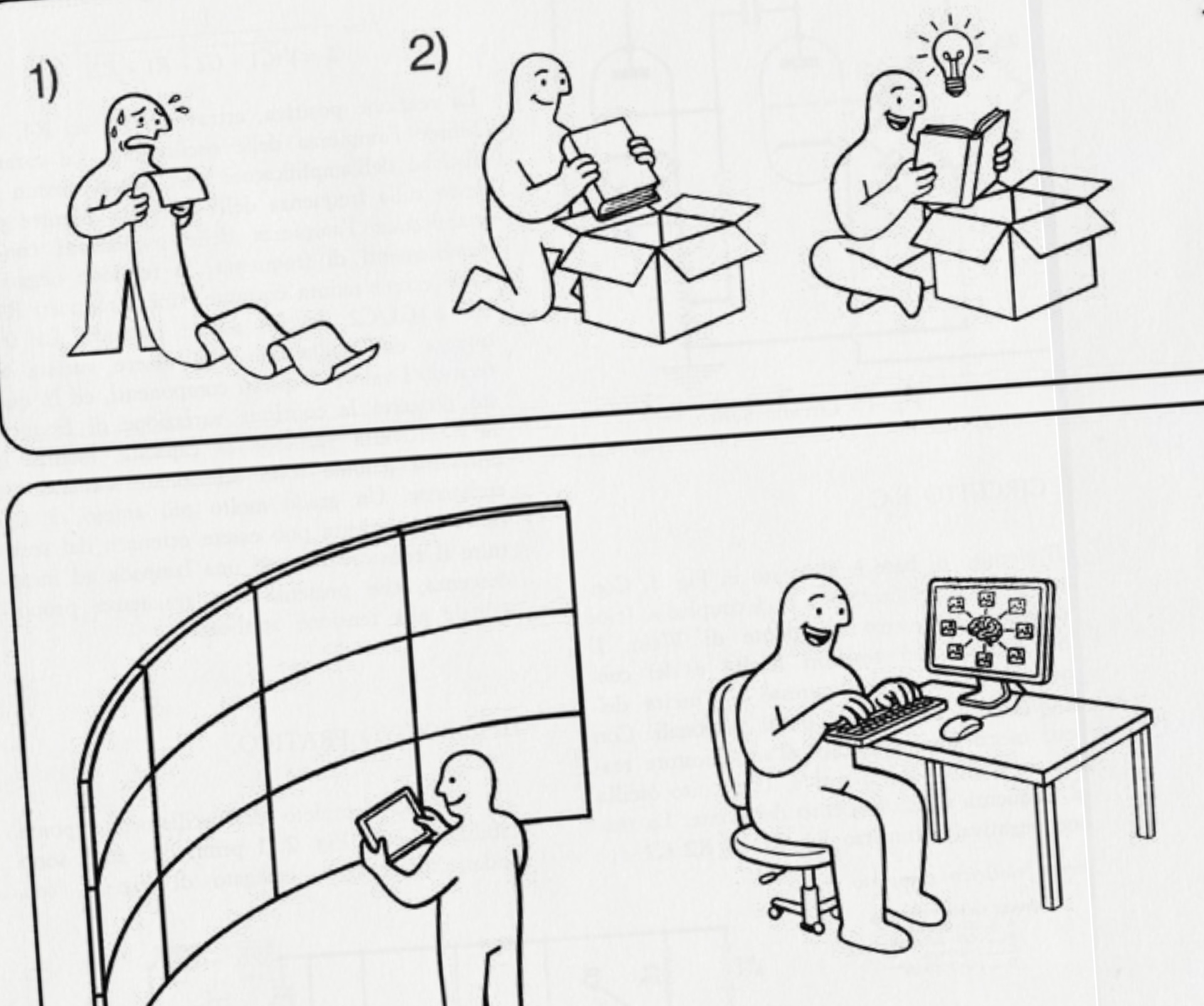
02
The Playbook
Every tool in the hybrid kit. Virtual production, motion control, CGI, AI, and traditional craft. How we use each, when they earn their place, and how they connect into a workflow that compounds across campaigns instead of starting from scratch every time.
03
The Business Case
The case for the boardroom. Selling hybrid upstairs is often the hardest part, so we wrote out the commercial logic. Better return on production spend, real ESG outcomes, lower AI risk, and why partnership beats in-housing or buying one vendor's stack.

04
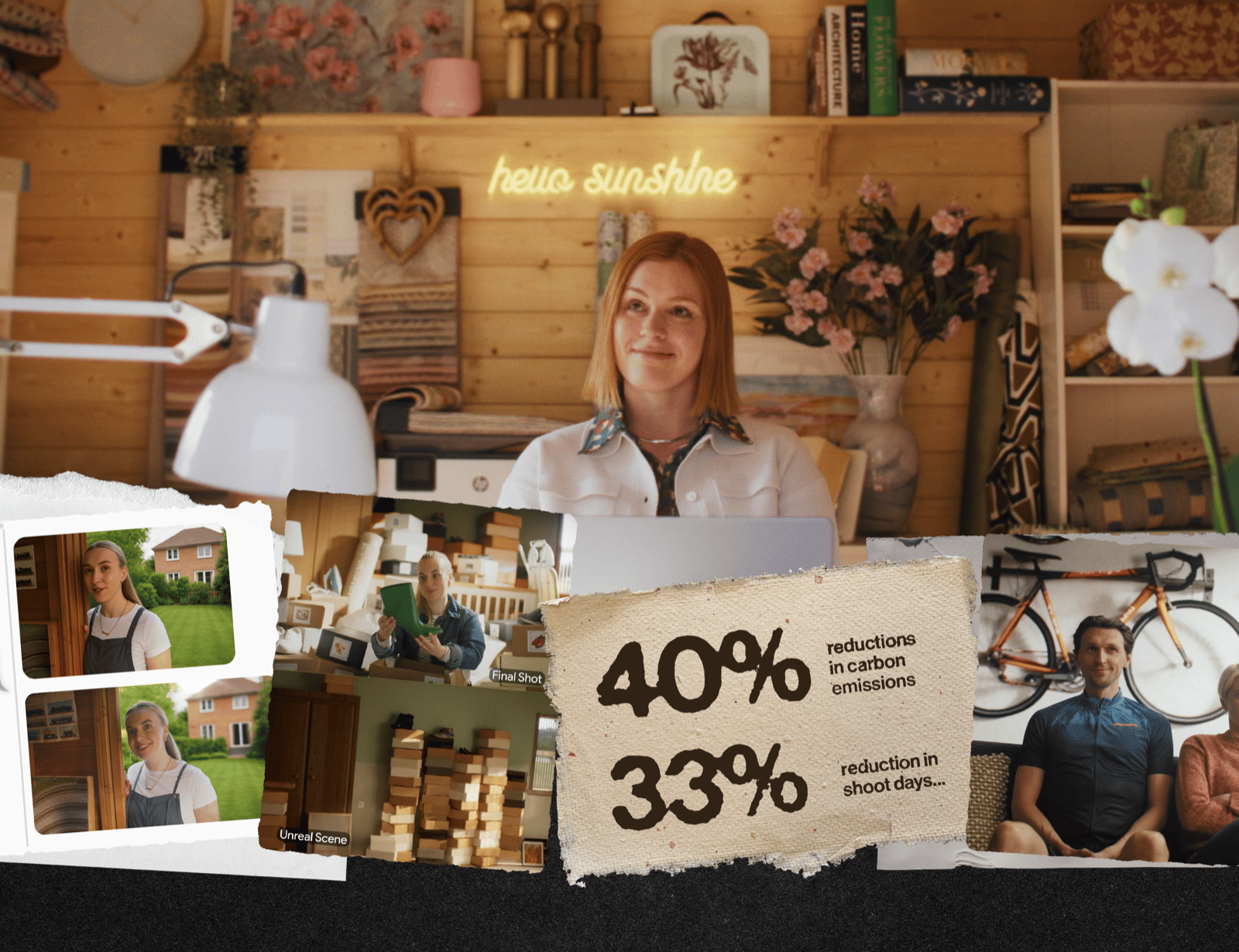
Case Studies
Three projects, three different shapes of hybrid. Powersheds where every tool earned its place, traditional craft included. GTR with modular volumes shot on location. Russell Hobbs with
AI-generated environments paired with Virtual Production to bring them to life. The production decisions in full as well
as the outcomes!
05
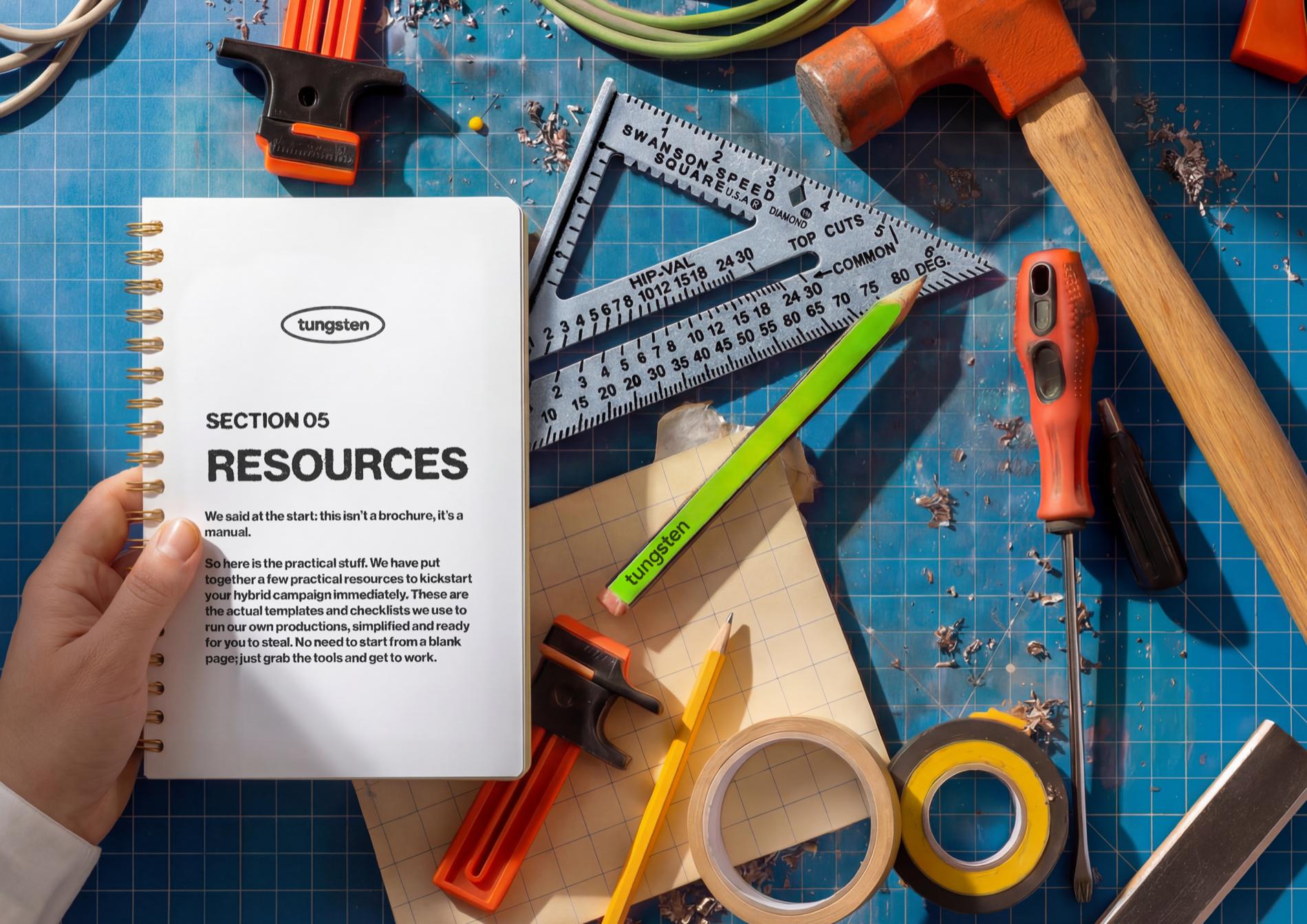
Resources
Resources you can actually use, free whether or not you work
with us. A calculator that scores your project. A brief template that scopes outcomes properly. A glossary so the conversation
makes sense.
Why we made it
Hybrid production is still a niche term. There's a lot of ambiguity around what it actually means, especially when VP and AI get bundled in. We run the PROMO events as well as Hybrid Production panel, and the same thing happens every time. People come up after saying they had no idea we could do that. This is that conversation packaged up. Five years of workflows, problem-solving, templates, and lessons, free to use whether or not you work with us. The industry shifts faster when someone shares the method.
While you're here
Try the tools.
Calculator
VP Viability Calculator
Score your brief against ten factors and find out whether virtual production actually adds value. Two minutes. No email, no follow-up.
→
Template
The Hybrid Brief Template
The form we use to scope hybrid projects. Fourteen questions about outcomes, audience, and constraints. Free to use whether or not you work with us.
→
Get the manual
Sixty-two pages, on the house.
Drop your details. The manual lands in your inbox. You'll join our newsletter while you're at it.
Unsubscribe any time.