How we built seven researched, locked worlds behind nineteen real product photographs for SGS's Rikä launch, and why a prompt on its own never gets you a place.

Before we made a single picture of our garage, we wrote down what work it does. Brakes, clutches, tyres, the stubborn rusted-bolt jobs an impact wrench is built for. Giving a building that doesn't exist a job history sounds daft, but it's where everything on SGS's Rikä launch started, because once the garage knew what it was for, every other decision had an answer.
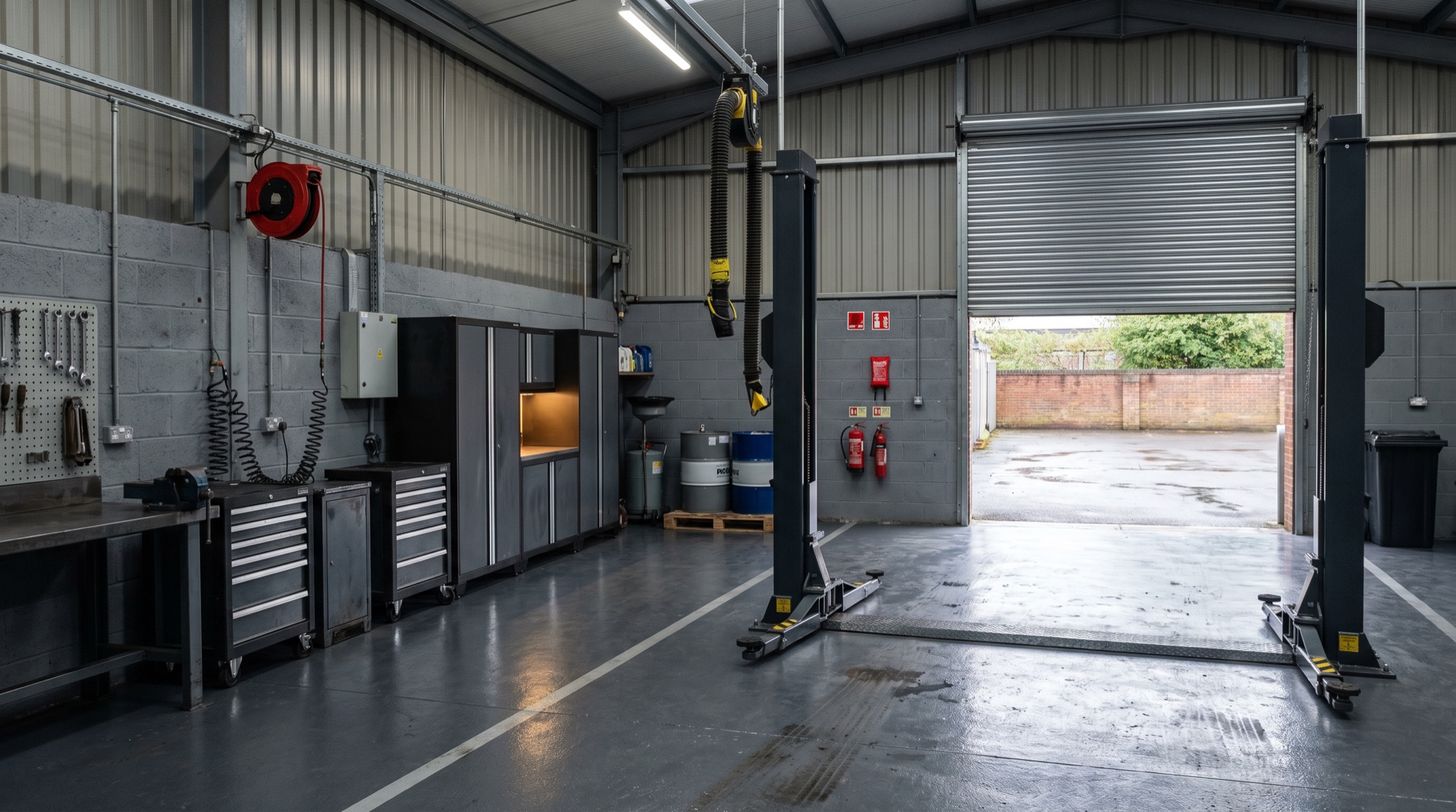
A prompt makes you a picture. What we needed was a place, somewhere you could point the camera at the wheel nut, then turn round to the workbench, and still be standing in the same building with the same bricks, the same lift and the same light. Ask a generator for that second shot with nothing holding it together and it hands you a different garage, because it has no memory of the first one. Everything below is about building the thing that holds it together.
Seven places, one standard
SGS needed a nineteen-tool range launched out of one studio in Leeds, with every tool turning up somewhere a tradesperson would recognise, so we built seven worlds. The garage, a Victorian terrace being gutted, the back of a 1930s semi with an extension going up, a tower block seen from inside and out, a bathroom mid-fit and a farmyard. The planning started long before any of them existed, because every tool was shot for the world it would end up in, the impact wrenches for the garage, the drills and saws for the house, the big wrench for the tractor wheel. Nineteen products had to walk out looking like one brand, and that only works if every world underneath them is built the same way and held to the same bar. I'll use the garage to show you how, because it's the cleanest one to explain.
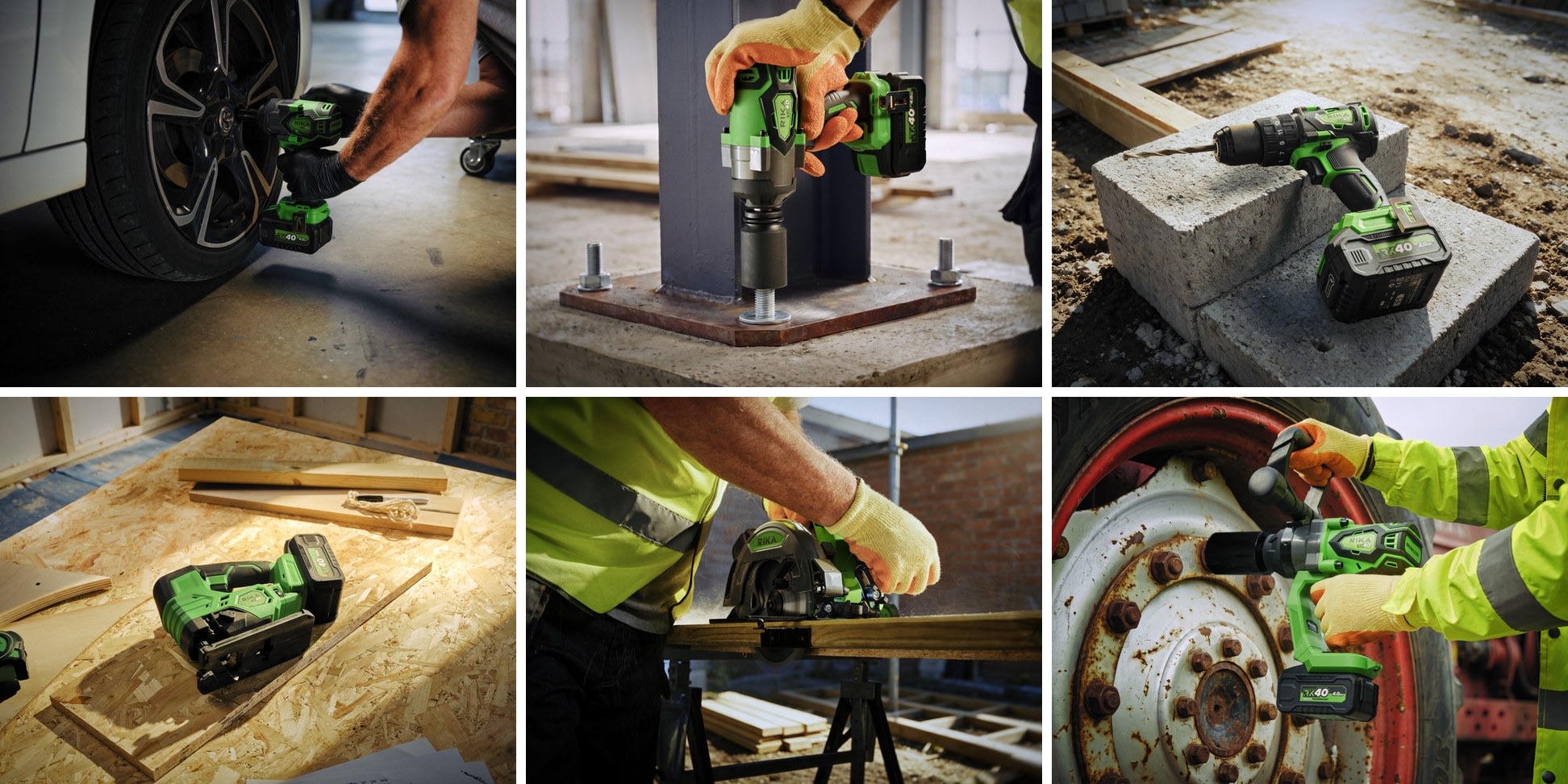
Finished frames from six of the seven worlds. Every tool in them is a real photograph.
First you write the lore
Before a single frame gets made, we write the place down as if it were real. One commercial unit with three connected zones a camera can move between without ever arriving in a different building, a lift bay, a service wall of tool cabinets and air lines, and a threshold where the floor runs out through the shutter to the yard. Give it a job and a stage of life and you can answer the questions that follow. Where the light comes from, why the floor is wet by the door, what lives on the service wall and what would never be there. We're describing somewhere that has to hold up from any angle a real one would.
Alongside what it is, we write down everything it must never read as. This one must never look like a house garage, a timber shed, an MOT test lane or a big industrial plant. No chequerboard floor, no neon, no chrome, no American muscle-car showroom. Leave a model to its own devices and it drifts toward the average of every garage picture ever posted, and the average of everything is a decent working definition of slop. Ruling out the near-misses by name is how you stop the drift.
Then you go and learn how the real one works
This is my favourite bit, and it probably says something about me. You can't build a believable place if you don't understand why the real one is laid out the way it is, so we research it down to the regulations.
Take the lift. We put a two-post lift in that garage on purpose. In the UK a two-post lift can't be used for the MOT test itself, that needs a four-post lift or a pit, so standing one in the bay tells anyone who knows garages that this is a general service-and-repair place, which is exactly where these wrenches live.
Or the yellow-and-black hose hanging next to the lift. That's tailpipe extraction. Diesel exhaust is a COSHH hazard and the guidance says opening the roller door isn't enough, you capture the fumes at the pipe, so a real garage of this kind has an extraction drop by the lift and ours does too. Same with the oil drums sat in a bund with a drip tray, the compressed-air ring main running high along the wall with a red hose reel dropping off it, and the three-phase board. That's the plumbing of a real trade, and when you get it right the eye relaxes without ever knowing why.
It's the same for every world, and it's where the hours go. The terrace is held at first fix, after the strip-out and before the plaster, solid brick chased for cables and a steel beam sat on its padstones with the fire boxing not on yet. The tower outside is caught mid steel erection, columns on their baseplates over the holding-down bolts and the concrete core running a few floors ahead under the crane. The bathroom is in the last hour of a fit-out, tiles done, the vanity unit up with no basin on it and an oak worktop dry-fitted and scribed to the wall before it's fixed, which is why a bit of sawdust belongs in an almost-finished room. A tradesperson looks at a photo and knows in a second if the stage is wrong, so we build to the standard that survives that look.
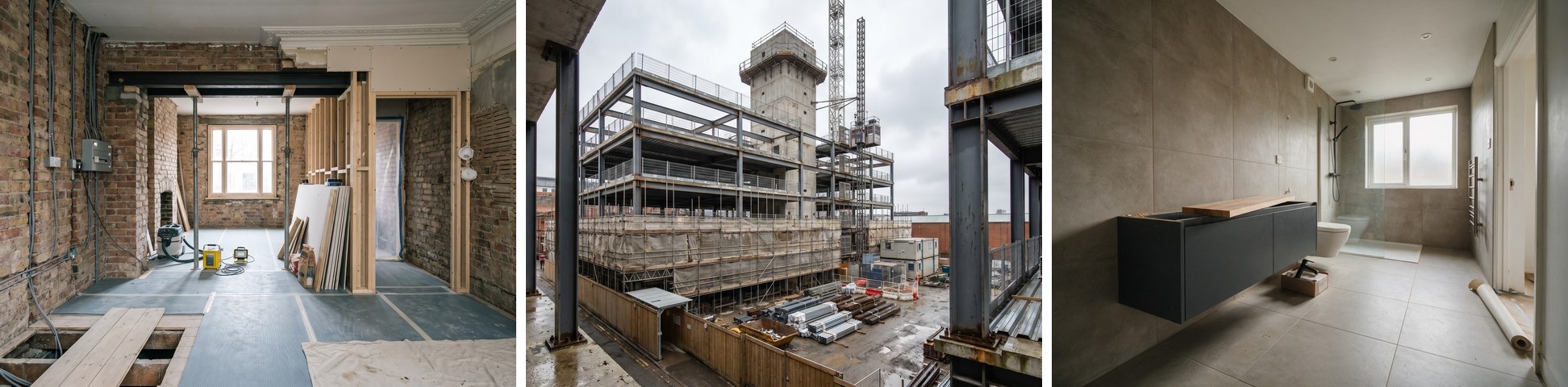
The terrace at first fix, the tower mid steel erection, the bathroom in the last hour of its fit-out. Each one built empty, with no product, no people and no Rikä green.
Tell it what to draw, never what to leave out
One that took me a while. On the bathroom we wrote "no mains socket" into the brief, because the wiring regs don't allow an ordinary socket in a bathroom like that. The model put one on the wall anyway. Mention a thing, even to ban it, and you've planted it. So now we name the right fixture instead, a shaver socket or a pull-cord, and let that fill the space. It's a small thing, and it's exactly the sort of small thing you only learn by building these over and over and checking every single result.
Materials, colour, and one rule
Then it's materials and palette, and we go granular. Painted blockwork, muted profiled cladding, a dark semi-reflective resin floor with honest oil staining and faint tyre marks, graphite tool cabinets, galvanised zinc. The rule I won't bend on is that the world never wears Rikä green. Not the cladding, not the cabinets, not a stray detail. Green belongs to the tool, so the garage stays in the background and lets the tool do the talking.
Build it in dull light, then throw the light away
Every world is built in flat, neutral, overcast light, deep focus edge to edge, the sort of light that exists only to show the place honestly. Then we throw it away. The real product photograph brings its own light, exposure and depth of field, and the world gets regraded to sit underneath the real shot.
Before we put a world behind a tool, we read the real photograph's camera. The lens, how high it sat, where the horizon falls, how quickly the focus drops off behind the subject. The world gets rebuilt to match exactly that. And you don't describe it to the model as bricks and cabinets, because the second you name a brick it gets drawn pin-sharp, and a hard, certain background behind a real photograph is the quickest way to break a shot. You describe the soft shapes and the blur a long lens would leave. Get that right and the garage falls away behind the wrench the way it would if you'd shot the whole thing in a real one.
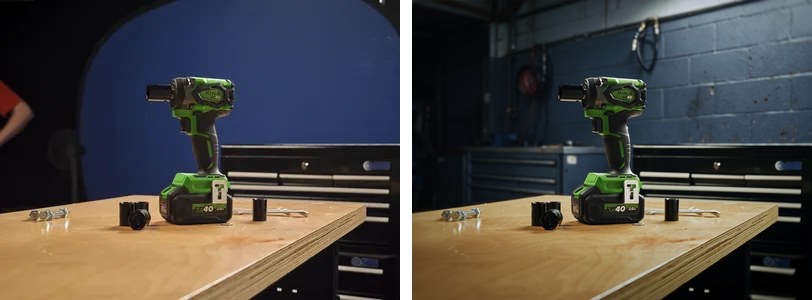
The real photograph on the studio backdrop, then the finished frame with the garage built to match its camera.
Build it once, then stop touching it
A world has to hold from more than one camera position, so we build somewhere you could walk around. Rough the location in, strip it back to a clean plate, make a wider establisher of the same spot, then lock that as the master. From then on it's fixed, a place we photograph products into and leave alone.
I learned that rule the hard way on the tower block. Early on we built its interior by editing one image into the next, then that one into the next, chasing it. Around the seventh go I stopped it, because I could see the quality bleeding out in front of me, a photocopy of a photocopy. We binned the lot and went back to research and one clean prompt from scratch. It took until the eleventh attempt to get a tower I'd put my name to, and every world since has been built that way. Make a new image off the back of a generated one and the softening just keeps compounding until there's no realism left.
Then it gets walked like a site
Once a world's built, it gets checked against all that research, the regs and the trade detail, and anything that doesn't add up gets flagged. Then I go through it myself, the way a site manager walks a real job. Is the extraction where it should be. Does the beam land on its padstones with enough bearing. Is the cavity wall built the way a cavity wall is built. Anything that fails gets binned and rebuilt from scratch. Sometimes I approve a world with a known fault still in it, and we write that fault down and carry it into every shot that uses the world, so nobody ever pretends the thing is flawless. Being straight about where the seams are is the only version of this I'm happy putting my name to.
The tool was always real
Through all of that, the tool itself is never generated. Every one is a real photograph, shot at around twelve thousand pixels across, real metal, real grease, real casting marks, in the hands of someone who knows how to use it. Only the world behind it is built. Zoom right into a finished frame and the wrench is still a photograph, sharp down to the grain, with the garage soft behind it where a long lens would put it. For a brand that's the whole point, the product on the page is the product in the box.
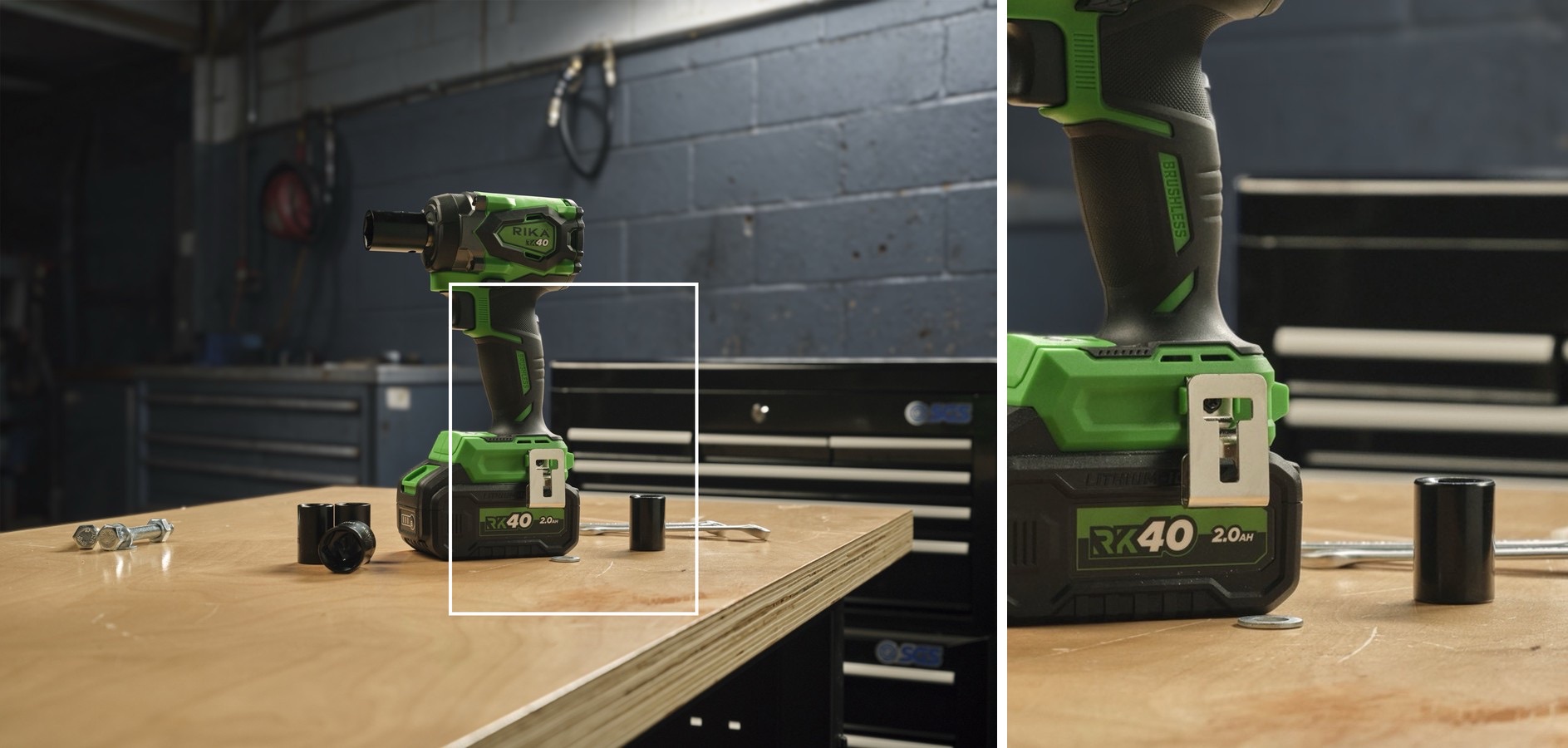
What a brand ends up with
Anyone launching a range knows the hard part comes after the first good shot. It's whether product nineteen still looks like it lives in the same place as product one, under the same light and held to the same standard, or whether the range starts to look thrown together the deeper into the catalogue you get. Every Rikä tool went into a world that was researched, checked and locked, so all nineteen products and a hundred and forty finished assets read as one brand from the first frame to the last.
That consistency comes from control, and the control runs the whole way through. The tool is a real photograph nobody touches. The world behind it is decided down to which lift sits in the bay and which way the light falls, signed off before a single product goes in, and fixed once it's approved. Nothing in the frame is left to whatever a model happens to produce on the day, which is what lets a brand put a built world behind its product and still stand behind every pixel.
And the worlds don't get thrown away at the wrap. SGS keep them. When the next tool lands or the next season comes round, we build straight on top of what's already there and it matches, because the place already exists.
The method travels, too. For our talk at Leeds Digital Festival we built a sauna bar in a converted mill the same way, and the research turned up a rule I'd never have guessed, no glass in the hot room. Our bottle was glass, so it could only ever live at the bar, and that one fact decided every shot before anything was generated.
It's a lot more work than typing "British garage" and hitting go, and it's what lets a brand-new name walk out looking like it's been around for years, consistent across the whole range and in control of every frame.
From our work
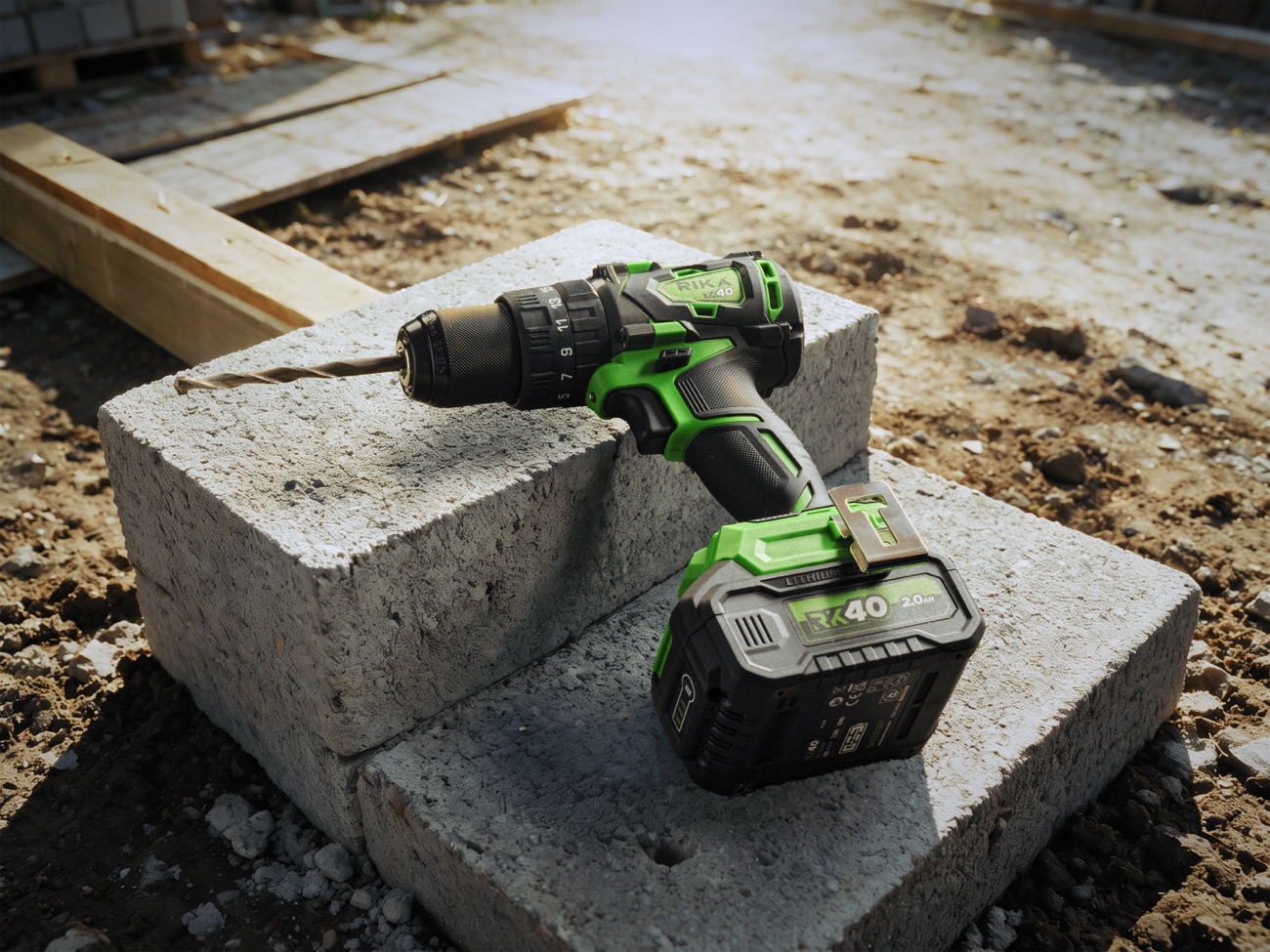
More from the blog
 AI in Production
The Death of Epic
Why the most expensive shot in cinema history now costs the same as a shampoo product shot, and what that means for the future of marketing and everyone making content.

 Company News
Tungsten Welcomes James Pierechod to the Board
Tungsten Media welcomes James Pierechod as a new shareholder and Non-Executive Director to drive innovation and growth in multi-disciplinary creative production.
 Strategy
Why Does My Brand Need Video Content?
Video content is essential for branding in 2023. Discover how high-quality video can increase credibility, enhance trust, and open up new marketing opportunities. Learn how Tungsten can help you create dynamic and innovative video content that will stand out from the crowd.